
Mold Removal in Santa Rosa, CA: How Remediation Works
Describe the mold once and independent Sonoma County remediation companies reply with free quotes. Here is what a proper mold removal job in Santa Rosa, California includes, what it tends to cost, and the California rules that protect you when you hire.
Get a Free Quote Call (707) 896-6015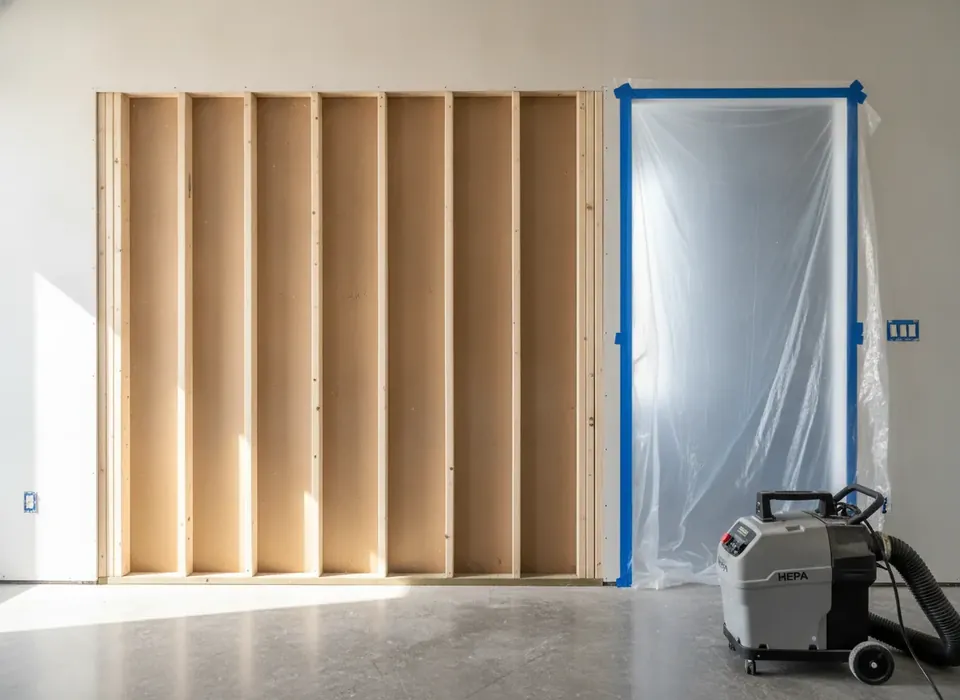
What is going on behind the stain
Mold needs moisture, something to eat and time. Wood, drywall paper and dust supply the food. Water is the part you control, and in Santa Rosa it usually arrives in winter: a roof leak during a December storm, rain blowing past an old window, groundwater pooling under a raised floor, or condensation on a cold wall.
The dry summer then hides it: the stain fades while growth continues inside the wall until the fall heat brings a musty smell.
Scrubbing the visible spot rarely solves it. If you do not know where the mold is or how far it runs, start with a mold inspection.
What remediation companies typically do
Inspect and map moisture
Moisture meters and often a thermal camera show how far the water traveled. The water source gets named so a plumber or roofer can fix it.
Contain the area
Plastic sheeting and a zippered door seal the work zone. A HEPA air scrubber keeps the room under negative pressure so spores and dust do not drift into the rest of the house.
Remove what cannot be cleaned
Moldy drywall, insulation, carpet and pad are cut out and bagged. Solid wood framing is usually cleaned, HEPA-vacuumed and sometimes sanded.
Clean and dry
Surfaces are HEPA-vacuumed and wiped. Fans and dehumidifiers run until framing reads dry.
Check the result
A visual check and moisture readings, ideally confirmed by an independent inspector with clearance testing, before the wall is closed.
Rebuild
New insulation, drywall and paint, often by a CSLB-licensed contractor and sometimes under a building permit.
Find the page for your problem
Most Sonoma County mold jobs start from one of these water sources.
- Crawl space mold: musty floors and damp joists.
- Mold after floods, storms and leaks: storms, burst pipes, river floods.
- Attic and roof-leak mold: leaks and condensation.
- Bathroom and kitchen mold: showers, sink cabinets and window sills.
- Mold in fire-rebuilt homes: moisture after the 2017 and 2020 fires.
- Rental and tenant mold: California rules for renters and landlords.
Black mold: what it is and what it is not
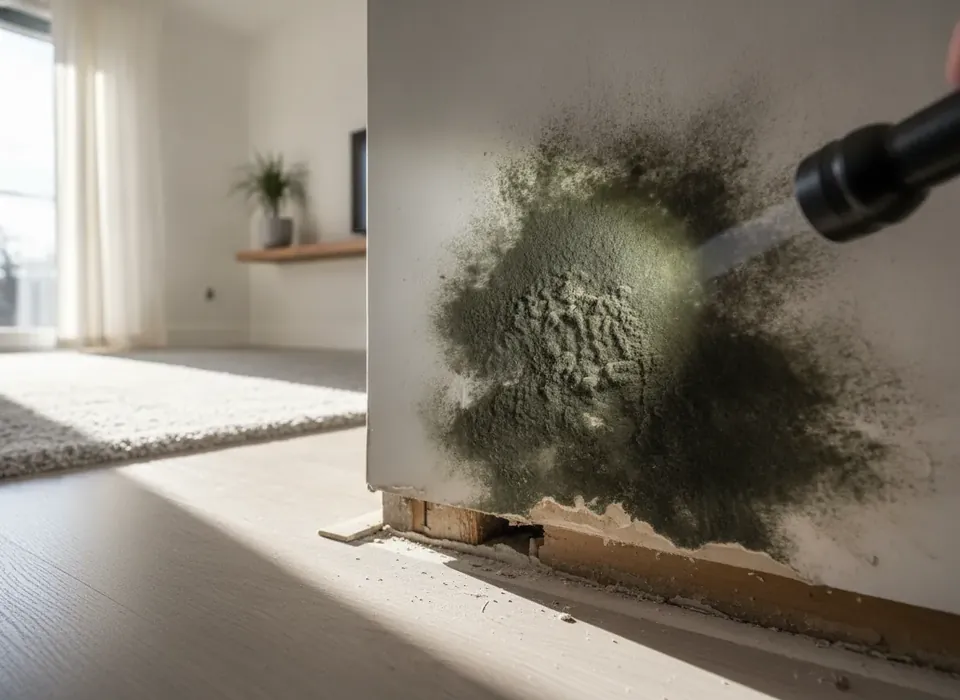
"Black mold" usually means Stachybotrys chartarum, which grows on drywall paper and wood that stay wet a long time. Many other molds are dark too, so color alone does not identify it.
California has no exposure limit for black mold or any other mold. The state health department reported that science-based limits could not be set. The EPA and CDC advice is the same for every indoor mold: molds can cause allergic reactions and asthma flare-ups in sensitive people, so fix the moisture, remove the growth, and keep vulnerable people away from the work. If someone has symptoms, see a doctor.
What it does tell you is that material stayed wet for a while, so expect affected drywall to be cut out and the leak traced.
HVAC and duct mold
Many older Santa Rosa homes have a furnace in the crawl space or attic. Ducts that run through a damp crawl space can pick up moisture, and in summer, cold supply ducts in a hot attic can sweat. A musty smell that gets stronger when the system turns on is a common clue.
Duct and equipment work is mechanical work. A company that cleans or replaces ductwork, coils or the air handler should hold a license class that fits it, such as C-20 (warm-air heating, ventilating and air conditioning), and replacing equipment usually needs a permit. Moldy flexible duct is usually replaced rather than cleaned, and the moisture behind it needs fixing too.
What mold removal costs
| Item | Typical range | Source |
|---|---|---|
| Mold remediation, per sq ft | $10–$25 (avg ≈ $18) | This Old House 2026; Fixr 2025 ($10–$30) |
| Typical whole job | $1,500–$9,000 (national avg ≈ $3,500) | Fixr 2025 |
| Small area ≈ 50 / 100 / 200 / 500 sq ft | $500–$1,250 / $1,000–$2,500 / $2,000–$5,000 / $5,000–$12,500 | This Old House 2026 |
| HVAC / ducts | $3,000–$10,000 | Fixr 2025 |
| Whole house | $10,000–$30,000 | Fixr 2025 |
Containment, material removed, access, drying time, clearance testing and rebuild drive the price. North Bay labor and disposal often run above national averages, though no local index exists. The Santa Rosa cost guide has a calculator for planning.
California rules that protect you
- No mold license, but contractor rules apply. California issues no mold-specific license. Since January 1, 2025, any job of $1,000 or more, any job that needs a permit, or any job with employees requires a CSLB-licensed contractor. The class should fit the work, for example B or B-2 for tear-out and rebuild, C-20 for HVAC, C-22 for asbestos.
- Written contract and down payment. Home improvement contracts generally must be in writing, and the down payment generally cannot exceed $1,000 or 10% of the price, whichever is less.
- Cancel rights. You generally have three business days to cancel (five for seniors 65 and over), and seven days for repairs after a declared disaster.
- Permits. The City of Santa Rosa requires a permit unless the California Building Code exempts the work. In unincorporated Sonoma County, Permit Sonoma exempts minor drywall repair only up to 100 sq ft. Ask the company or your building department.
- Older homes. For materials from before 1981, ask about an asbestos survey before tear-out. For homes built before 1978, ask whether the company is EPA Lead-Safe Certified.
When it is urgent
Move quickly when water is still entering, sewage or floodwater was involved, or drywall and carpet have been wet longer than 48 hours. Meanwhile, stop the water if you can, take photos, keep children and pets out, and do not dry-scrub or sand the growth.
Questions to ask every company
- What is your CSLB license number, and which classification covers this work? (Check it on CSLB's license lookup before you sign.)
- Can I have a written contract with the full price, the scope, and the three-day cancellation notice?
- Is the down payment within the California cap: $1,000 or 10% of the price, whichever is less?
- How will you confirm the job is done: a visual check, moisture readings, or clearance testing by someone independent?
- What is the water source, and who fixes it: you, a plumber or a roofer?
Get mold removal quotes in Santa Rosa, CA
Tell us where the mold is, roughly how big the area is and what got wet. We pass it to independent remediation companies in Santa Rosa and Sonoma County, and they reply with quotes.
Independent Sonoma County companies reply to you directly. No obligation, and you choose who to hire. Prefer to talk? Call (707) 896-6015
Mold removal questions
Is mold removal the same as mold remediation?
Companies use both words. Removal sounds like scrubbing a stain; remediation means the full job: finding the water, sealing off the area, removing damaged material under HEPA air filtration, drying, and checking the result. When you compare quotes in Santa Rosa, CA, look for those steps in writing rather than the label on the truck.
Can I remove mold myself?
The EPA suggests a homeowner can usually handle an area under about 10 square feet, with gloves, goggles and an N95 respirator, if the water problem is fixed. Larger areas, mold inside walls or ducts, sewage water, or anyone in the home with asthma or a weak immune system are reasons to get professional quotes.
Do mold removal companies need a license in California?
California issues no mold-specific license. Construction rules still apply: any job of $1,000 or more in labor and materials, any job that needs a building permit, and any job using employees must be done by a CSLB-licensed contractor. Ask for the license number and check it on CSLB's license lookup before you sign.
Is black mold more dangerous than other mold?
Color does not tell you how risky a mold is, and California has no exposure limits for any mold. The EPA and CDC treat all indoor mold the same way: fix the moisture, remove the growth, and protect sensitive people. If anyone has symptoms, see a doctor. The cleanup plan does not change with the color.
How long does mold remediation take?
A contained bathroom or closet job is often a day or two. A wall or subfloor soaked by a winter leak can take a week or more once drying is counted, and clearance checks happen before containment comes down. Rebuild is often a separate contractor and may need a permit. Ask each company for a written timeline.
Seeing or smelling mold? Get a clear plan.
Free, no-pressure quotes from independent companies across Santa Rosa, Petaluma, Rohnert Park, Windsor and Sonoma County.